- Serving Boston and the Greater Boston Area

Planting & Maintenance in North End, MA
There is almost no ground-level soil in the North End, so the garden question here is really a container and structural-planting question: what will hold up on a roof deck, a fire-escape rail, or a window box four or five stories above Hanover Street, in wind that comes off the harbor with nothing to slow it down. Alley access is tight or nonexistent on streets like Sheafe, Prince, and Garden Court, which changes how soil, stone, and root balls get in and how debris gets out. Planting & Maintenance here is built around those two facts first, aesthetics second.

What Planting & Maintenance looks like in North End
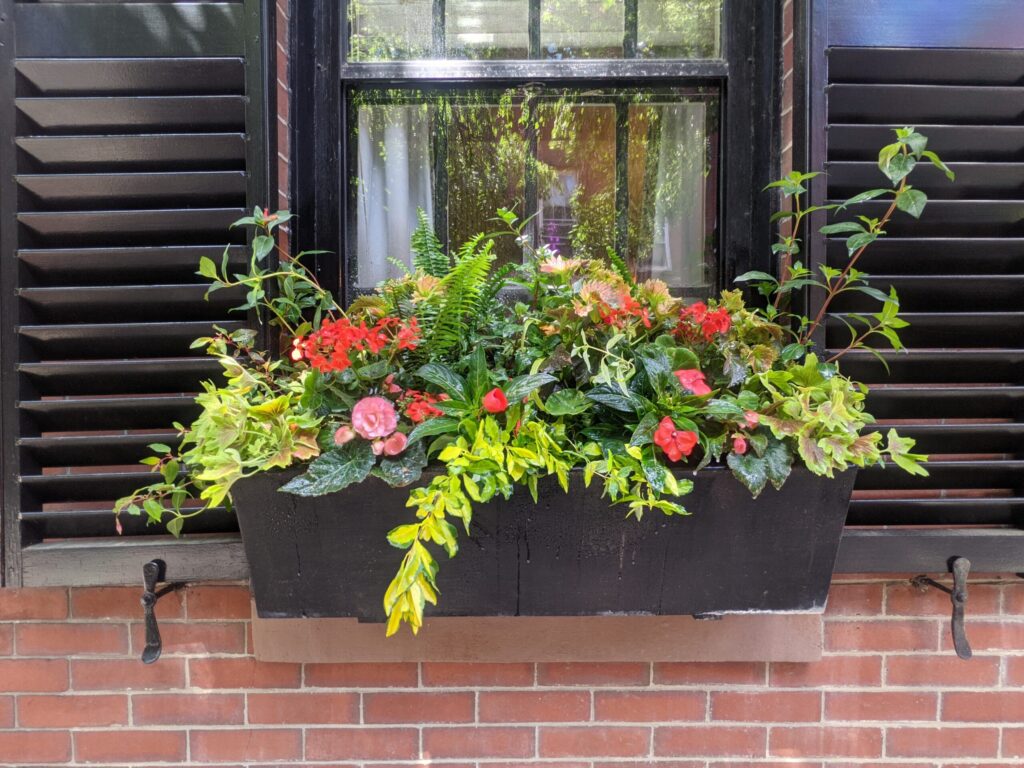
Most North End planting lives in three places: roof decks over triple-deckers and converted warehouses, iron fire-escape and railing containers, and street-facing window boxes on brick facades that the North End’s historic character invites everyone to notice. There is very little in-ground planting to speak of — a rare postage-stamp courtyard, occasionally a strip along a rebuilt sidewalk — so the work is almost entirely about engineering good soil volume and drainage into containers that were never designed to be gardens.
Light is inconsistent and often extreme. A roof deck on a taller building near the waterfront can get full, unbroken sun with heat radiating off the membrane below, while a window box two floors up on a narrow street may sit in shade most of the day, boxed in by neighboring buildings. We plant to the specific exposure of each level and elevation rather than assuming one plan works for the whole building.
Access is the other constant. Many buildings have no loading area, no elevator large enough for bulk soil, and alleys too narrow for a standard delivery truck. Materials frequently move in by hand, in stages, on a schedule that respects narrow one-way streets and residents’ parking. We plan installations around this reality rather than discovering it on site.
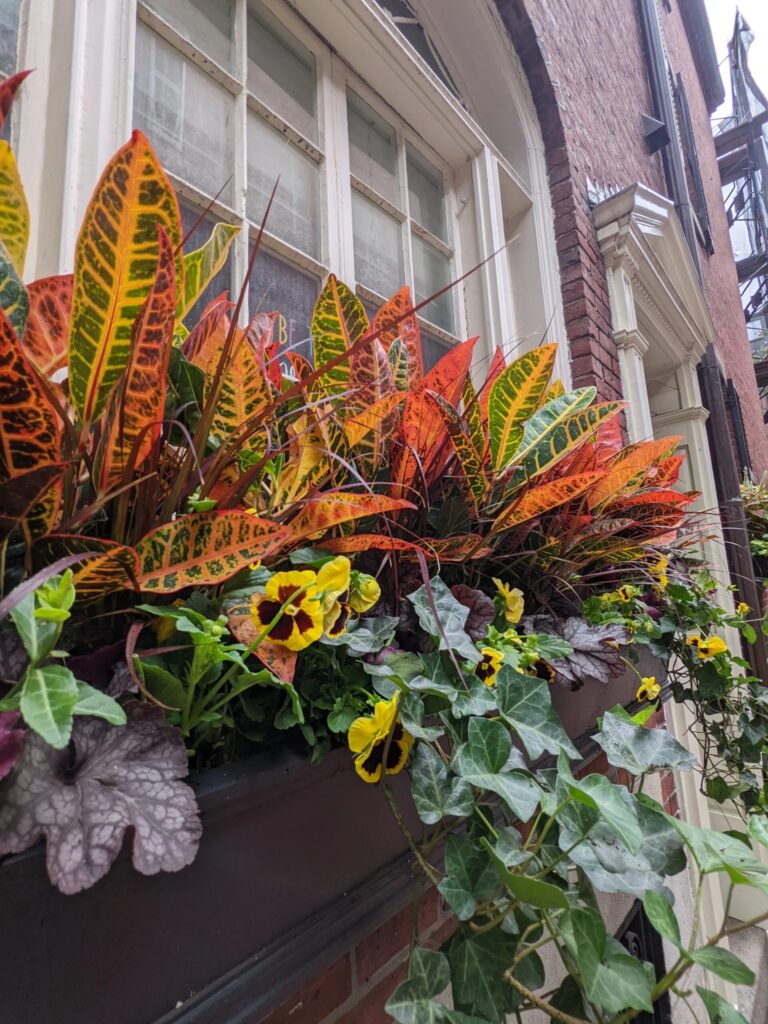
Because so much of the North End’s visible planting sits on historic brick facades in a locally reviewed district, window box style, color, and mounting hardware are usually seen by more than the resident — they read as part of the streetscape. We design pieces that hold up to that scrutiny while still functioning as real gardens, not just seasonal decoration.
What we account for here
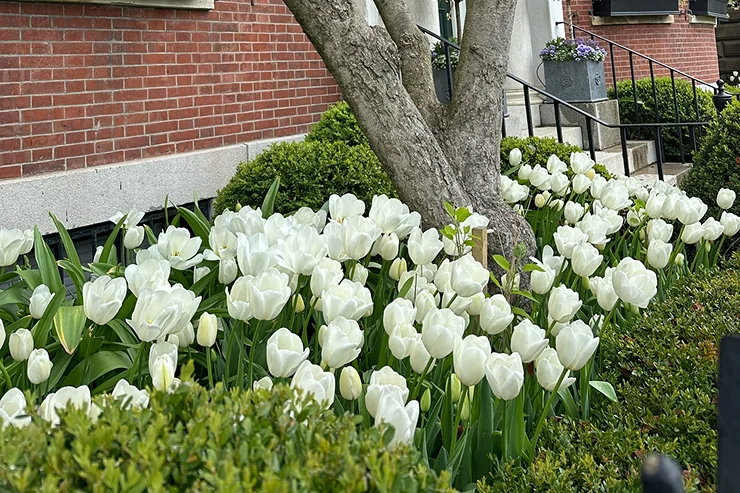
What we account for here
Almost no ground-level soil
With true garden beds essentially unavailable, we treat every roof deck, fire escape, and window box as its own contained ecosystem — engineered soil mixes, adequate depth, and drainage that doesn’t overload the structure below or stain the brick.
Extreme wind exposure
Upper floors and roof decks in the North End catch harbor wind with no buffer. We select root-stable, wind-tolerant species, anchor containers against tipping, and secure trellises and taller plantings so a single gust doesn’t undo a season’s growth.
Near-impossible alley access
Streets like Salem, Prince, and Sheafe were never built for landscape deliveries. We schedule material in smaller loads, use hand-carried bags and lightweight containers where trucks can’t reach, and coordinate timing around narrow streets and limited parking.
Street-facing visibility and review
Window boxes and any street-visible planting on North End facades are part of a dense, closely watched historic streetscape. We keep materials, colors, and mounting appropriate to the building while still designing a box that performs through the season.
Recent North End work
Recent work in the neighborhood has centered on rebuilding tired window boxes on a row of brick facades near Hanover Street with wind-rated planters and a simplified, long-season palette that needs fewer mid-summer swaps. We’ve also handled a roof deck retrofit above a converted warehouse building, replacing undersized containers with a properly drained, wind-anchored planting system that carries the deck from late spring through the first frost. Both projects were staged around limited truck access, moving soil and containers in by hand over several visits rather than a single delivery.
Other services we provide in North End
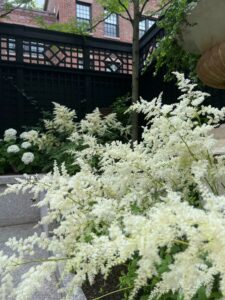
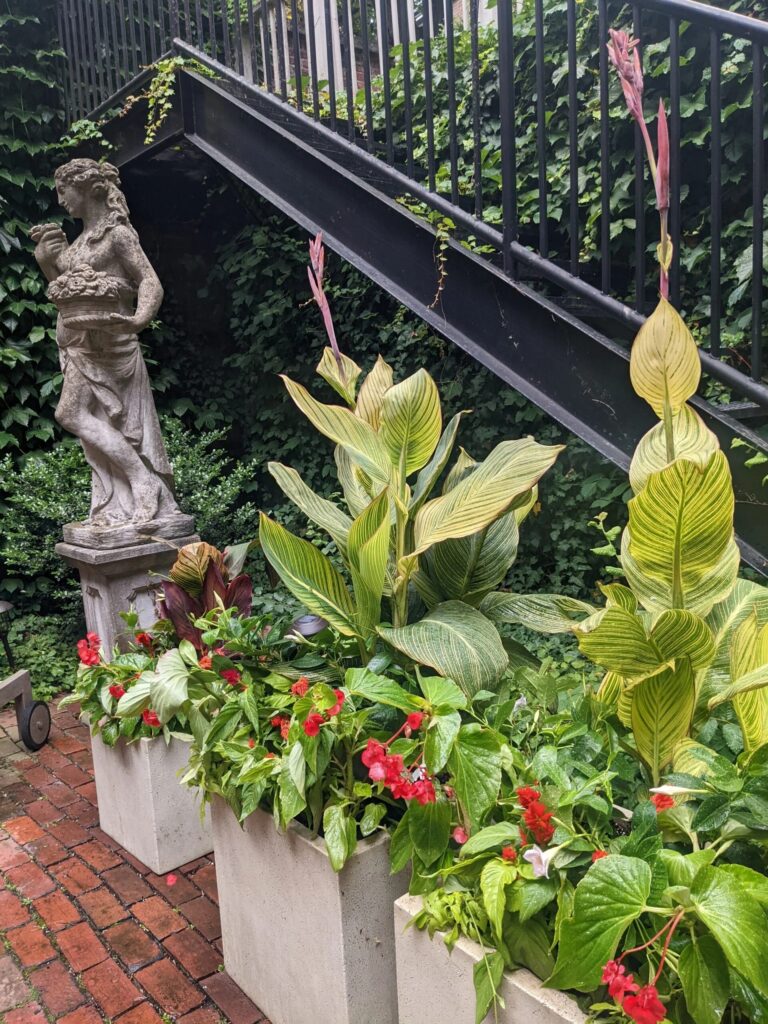
Planting and maintenance is one piece of a larger North End practice. We handle full garden services in North End for buildings that need more than seasonal upkeep, including container and window box design built specifically for narrow brick facades, roof deck and terrace planting engineered for wind and weight limits, drip irrigation systems that keep upper-floor containers alive through August without daily attention, and low-voltage landscape lighting for roof decks and entries that gets used well past sunset in a neighborhood that stays out late. If your property sits closer to North End or you’re comparing notes across neighborhoods, we run the same planting and maintenance approach in North End and in Downtown Boston, and our citywide overview is at Planting & Maintenance in Boston.
Based 1.2 miles from North End
Rouvalis Gardens is based at 5 Crescent St in North End, about 1.2 miles from the North End across the Charles River locks. That proximity matters for a neighborhood where scheduling around narrow streets, resident parking, and building access windows takes real local knowledge — we’re close enough to respond quickly and familiar enough with North End buildings to plan around their quirks before we arrive.
Getting started
A first visit starts with a walk-through of the specific space — roof deck, fire escape, window boxes, or a combination — to check structural load, sun exposure, and how materials will actually get in. From there we put together a planting and maintenance plan with a straightforward visit schedule, so you know what’s being done and when without having to manage it yourself.
Call to set up a consultation for your North End property. We’ll talk through access, exposure, and what a realistic season of maintenance looks like before any work is scheduled.
Other services we provide in North End
Planting and maintenance is often the starting point for North End properties, but it rarely stands alone. Many of the tight courtyards and brick-lined entries here call for courtyard garden design to work out layout and access before plants go in, or container and window box design where there’s no ground bed to speak of. For rooftop and terrace spaces above the neighborhood’s dense blocks, roof deck and terrace planting addresses wind and weight limits, and pairs well with drip irrigation installation to keep containers watered without daily attention.
Once a planting scheme is established, we keep it looking sharp through seasonal planting and color rotations and spring and fall cleanup, while boxwood and hedge maintenance and perennial border design hold structured beds in shape year to year. Evening use of a small North End garden or terrace is often extended with low-voltage landscape lighting. Where historic facades and public rights-of-way are involved, Historic District landscape consulting helps sort out what’s allowed before work begins.
Homeowners tending their own beds can also bring in garden coaching and consultation for guidance through a full season of planting and upkeep.
Ready to talk through your North End planting plan?
Request a consultation and tell us about your stoop, balcony, or narrow courtyard. We’ll set up a visit to check sun exposure, foot traffic, and building access, then send a written plan and price before any planting or maintenance work begins.
What Our Customers Say
Frequently Asked Questions
Can you actually get planting materials into North End buildings without alley access?
Yes, though it usually means hand-carrying soil and containers in smaller loads rather than a single truck delivery. We plan deliveries around narrow streets, resident parking, and building entry points in advance so the install isn't slowed down mid-project.
Do North End window boxes need approval before we change them?
Many North End buildings sit within a locally reviewed historic district, and street-facing elements like window boxes are often visible from the sidewalk and considered part of the streetscape. We design within materials and proportions that are unlikely to raise concerns, and can advise on anything that may need a closer look before installation.
What plants actually survive on a windy North End roof deck?
Wind-tolerant, deep-rooted or well-anchored species do best — ornamental grasses, sturdy perennials, and shrubs selected for root stability rather than delicate bloom. We also anchor containers and secure taller plantings so wind doesn't undo the design over a season.
Is there any in-ground planting in the North End at all?
Rarely. Most North End properties we work on have no usable ground-level soil, so the practical garden lives in containers — roof decks, fire escapes, and window boxes — engineered with proper depth and drainage to function like real beds.
How often does North End maintenance need to happen?
Container and window box plantings dry out faster than ground beds, especially in wind and full roof-deck sun, so visits tend to run more frequently in peak summer. We set a schedule based on your specific containers and exposure rather than a one-size visit plan.